Unit 9
Flat and solid shapes
Name shapes by their sides and corners, spot solid shapes at home, and split a shape into halves and quarters.
Read
Sides, corners and turning
Meera draws a square on a piece of paper. Then she turns the paper round until the square looks like a diamond.
"It is not a square any more!" says her little brother.
"Count the sides," says Meera. "Count the corners. Are they the same?"
They count. Four sides, four corners, just like before. Turning the paper did not change the shape.
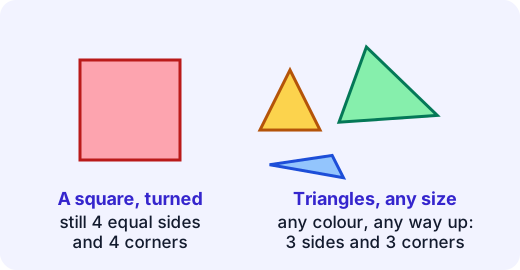
What makes a shape that shape
A side is a line that makes the edge of a flat shape. A corner is where two sides meet. To name a shape, count its sides and corners.
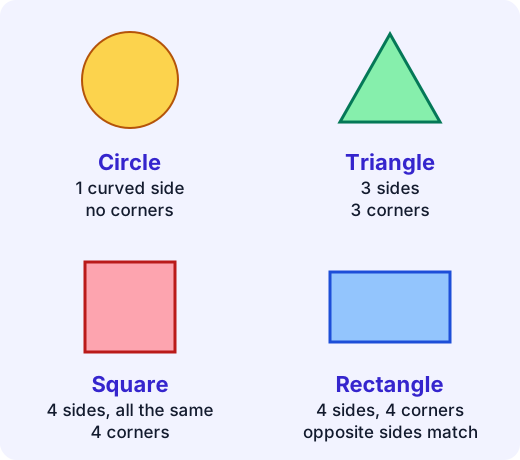
Shape Sides Corners Special Circle 1 curved side 0 perfectly round Triangle 3 3 Square 4 4 all 4 sides the same length Rectangle 4 4 opposite sides the same length A square is a special kind of rectangle, because it has 4 sides and 4 corners too, and its opposite sides match. For now it is enough to call it a square when all the sides are the same.
Colour, size and direction do not matter
A shape is not defined by:
- its colour (a red triangle and a green triangle are both triangles)
- its size (a tiny square and a huge square are both squares)
- which way it is turned (a triangle upside down is still a triangle)
What matters is the number of sides and corners.
Common mistake: "A diamond is not a square." A diamond is a square that has been turned so that a corner points up. Count the sides: 4 equal sides and 4 corners. It is a square.
Solid shapes
Flat shapes live on paper. Solid shapes are things you can hold. They take up space.
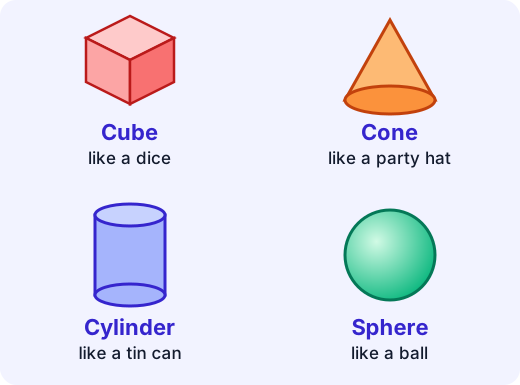
Solid Looks like How it behaves Cube dice, a sugar cube has flat square faces, stacks well, does not roll Cone party hat, ice-cream cone one flat round face and a point Cylinder tin can, a pipe two flat round faces, can stack or roll on its side Sphere ball, orange no flat faces, rolls in every direction Halves and quarters
You can split a shape into equal parts.
- Split it into 2 equal parts: each part is a half.
- Split it into 4 equal parts: each part is a quarter.
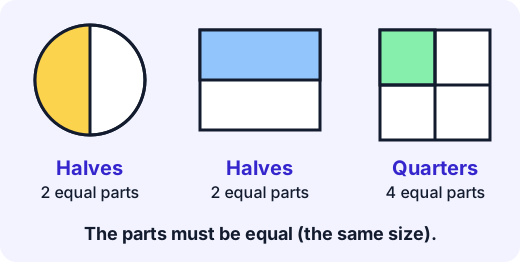
The parts must be equal, the same size. If you cut a roti into one big piece and one small piece, those are not halves, even though there are two pieces. Fold a paper in half, then fold it in half again, and you get quarters.
Try it: Find 3 things in your home that are cubes, cylinders, cones or spheres. Which one rolls? Which one stacks?
For the grown-up helping
Let your child handle real objects before drawing. Ask them to run a finger round a shape and count the corners aloud. Turn shapes in every direction and ask "Is it still a triangle?" Children often only recognise a shape in its usual position, so show a long thin triangle, a diamond square, a rectangle that is nearly a square. To make halves and quarters, fold paper or bread: ask "Are the parts the same size? How do you know?" Placing one part on top of the other is a good test. Avoid using the words "third" or "fraction" yet. Halves and quarters of shapes are enough for now.
Lab
The shape sorter
Sort shapes by counting their sides and corners. Some of the shapes are big, small, turned or squashed. Use the corner dots to help you count.
Your goals
- Put every shape in the right bin by counting its sides and corners.
- Notice that turning, colour and size do not change which bin a shape goes in.
The interactive lab opens once you register. Register to do this.
Activity
Shape hunt and fold
Your child hunts for flat and solid shapes around the home, then folds paper into halves and quarters. About 25 minutes.
You'll need
- Paper (about 4 sheets)
- Crayons or pencils
- Things around the home, such as a tin, a ball, a box, a plate, a clock, a book
Steps
- Walk around the home. Ask your child to find 3 flat shapes (for example a plate, a book cover, a window) and say how many sides and corners each one has.
- Find one of each solid shape: a cube or box, a cylinder (tin or cup), a cone (a party hat, funnel or paper cone) and a sphere (a ball or an orange). Ask which ones roll and which ones stack.
- Give your child a sheet of paper. Ask: Can you fold it into 2 equal parts? Let them fold, open it and check the two parts are the same by laying one on the other.
- Fold the paper in half again. Open it and count the parts: 4 quarters. Ask your child to colour one quarter.
- Now turn a paper square round so that it looks like a diamond. Ask: Is it still a square? How do you know?
- Draw a triangle in three different ways (big, small, upside down). Count the sides and corners of each.
Safety
- Use blunt-ended paper only. If a triangle or square needs cutting, an adult does the cutting with scissors.
- Do not use anything that is sharp, hot or breakable for the hunt.
Keeping a log of the activity is for registered learners. Register to do this.
Quick check
Shapes check
Seven questions. Count the sides and corners.
1.What shape is this?
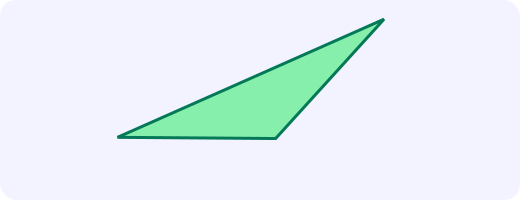
- A triangle
- A square
- A rectangle
- A circle
Choose one
2.How many corners does this shape have?
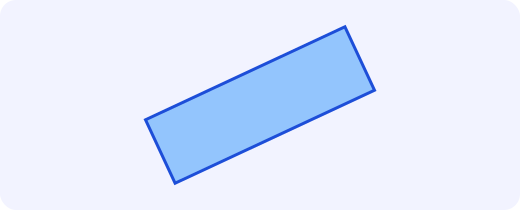
Answer with a number
3.Which solid shape is like a tin of beans?
- Cube
- Cone
- Cylinder
- Sphere
Choose one
4.Match each solid shape to a thing that looks like it.
- Cube
- Cone
- Sphere
- Cylinder
Match each to: A tin can · A dice · A party hat · A cricket ball
5.Which shapes have 4 sides and 4 corners? Pick all that apply.
- Square
- Rectangle
- Triangle
- Circle
Choose all that apply
6.This circle is cut into 4 equal parts. What is one part called?
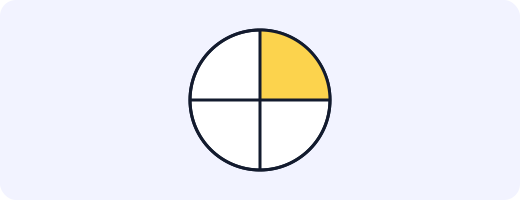
- A half
- A quarter
- A whole
Choose one
7.Is this rectangle split into halves?
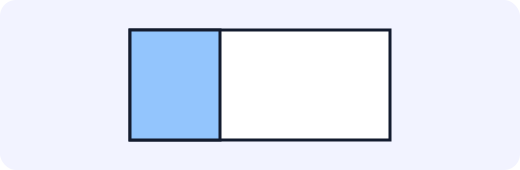
- Yes, there are 2 parts
- No, the parts are not equal
Choose one
Answering and checking are for registered learners. Register to do this.
Quick check
New puzzles
Use what you know about sides and corners in new puzzles.
1.A shape is big and red and upside down. It has 3 sides and 3 corners. What is it?
- A triangle
- A square
- A circle
- A rectangle
Choose one
2.Dev folds a round roti exactly in half. Then he folds it in half again. He opens it out. How many equal parts does he see?
Answer with a number
3.Which solid shape does not roll when you push it along a table?
- Cube
- Cylinder
- Sphere
- Cone
Choose one
4.How many corners do two triangles have altogether?
Answer with a number
5.Maya turns a square until it looks like a diamond. She says it is not a square now. Is she right?
- Yes, it changed into a diamond
- No, it still has 4 equal sides and 4 corners
Choose one
Answering and checking are for registered learners. Register to do this.
Activity
Tell it back
Your child explains, in their own words, how you know a shape is a triangle even when it is turned or a different colour. Three minutes.
Steps
- Draw or cut out a triangle. Turn it upside down and on its side. Ask "Is it still a triangle? How do you know?"
- Ask "What if I colour it blue and make it very small?"
- Ask "How can you tell a triangle from a square?" Let your child count out loud.
- Write down what your child says in their own words.
Keeping a log of the activity is for registered learners. Register to do this.
Like what you see?
Register for free to answer the quick checks, do the activities and save your work. Your work is saved on your device and syncs to your account.