Unit 3
Growing food
Sow seeds in a pot, care for them every day, and harvest something you grew yourself.
Read
A seed, a pot and some patience
Imran's grandmother can pick fresh mint from a pot on her balcony and drop it into tea. "I grew this from a cutting," she says. "It took a few weeks, but it never costs me a rupee."
Could you grow something to eat too? Yes, you can, even without a garden.
Herbs and vegetables
- A herb is a plant whose leaves we use to give food flavour, like mint, coriander (dhaniya), basil or parsley.
- A vegetable is a plant we eat for its leaves, roots, stems or fruits, like spinach (palak), radish, carrot or tomato.
Quick growers are best for a first try. Cress can be ready in about one to two weeks. Fenugreek (methi) leaves, coriander and radish take a few weeks. The seed packet tells you how long, and when to sow in your part of the world.
What a seed needs
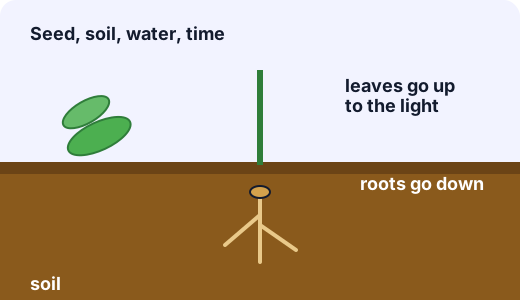
A seed is a tiny plant asleep inside a coat. To wake it up it needs water and warmth. Then the roots grow down, the shoot grows up, and leaves open to catch the light.
Set up your pot
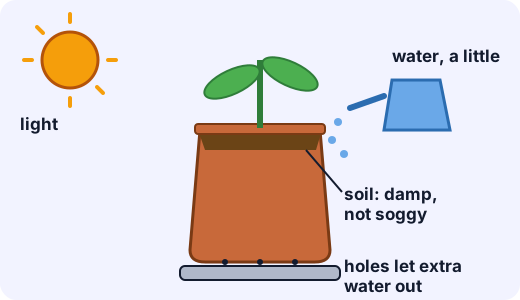
- Pick a pot or tub with holes in the bottom so extra water can drain out.
- Fill it with soil, almost to the top. Press it down gently.
- Make a shallow dip. Seeds go about as deep as twice the seed's width. Tiny seeds like cress sit on top of the soil.
- Drop in a few seeds, cover them lightly, and water gently until the soil is damp.
- Put the pot where it gets light. A sunny window or balcony is good.
- Add a label with the name of the plant and the date.
Try it: Put your finger in the soil up to the first knuckle. If it feels dry, water it. If it feels wet, wait.
Looking after your plant
- Water when the soil is dry. The soil should be damp, never soggy. Too much water is just as bad as too little, because roots need air too.
- Give it light. A plant that stays in the dark grows tall, thin and pale.
- Thin the seedlings. If they are crowded, a grown-up helps you snip the weakest ones. The others get more space.
- Look every day. Measure and write down how tall it is each week.
A pot of soil can look the same for days. Then one morning there are tiny green loops pushing up. Food takes time and care to grow. You cannot hurry it by giving extra water.
Harvest
To harvest is to pick your plant when it is ready. For leafy herbs, cut the outer leaves with child scissors and leave the middle to keep growing. Wash what you pick under the tap. Check with a grown-up before you eat anything. Then taste your own food, in a sandwich, a salad or a soup. It tastes different when you grew it.
If it goes wrong
Seeds that never sprouted, plants that droop, insects: every grower has these days. Ask: Was it too wet? Too dry? Too dark? Change one thing and try again.
For the grown-up helping
Choose seeds sold for growing food (not seed treated with dyes or chemicals, which may be marked on the packet). Wash hands after handling soil. Let your child do the daily checks, and don't rescue the plant too fast: noticing that it needs water is the lesson. If a pot fails, a second sowing is a good outcome, not a defeat.
Activity
Grow and harvest a herb or vegetable
Your child sows seeds in a pot or a patch, looks after them for several weeks, keeps a growth diary and harvests something to taste. Sowing takes 20 minutes; the daily check takes a few minutes; the whole project takes 1 to 6 weeks, depending on the plant.
You'll need
- A pot, tub or recycled container (at least 15 cm deep) with holes in the bottom, and a saucer or tray under it
- Potting soil or garden soil
- Seeds sold for growing food. Cress, fenugreek (methi), coriander or radish are good choices
- A small jug or watering can
- A label (a lolly stick or card) and a pen
- A ruler
- A notebook for the growth diary
Steps
- Choose the plant together. Read the seed packet. How many days until you can pick it? When should it be sown where you live?
- Fill the pot with soil, almost to the top. Press down gently and make a shallow dip as deep as twice the seed's width. Tiny seeds like cress go on top of the soil.
- Sow a few seeds, cover them lightly and water gently until the soil is damp. Stand the pot on a saucer in a place with good light. Write the name and the date on the label.
- Every day, your child touches the soil to check it and waters only if it is dry. They note what they see.
- Once a week, measure the tallest seedling with the ruler and write it in the diary. Draw a picture of the plant.
- If the seedlings are crowded, a grown-up helps snip the weakest ones.
- When the packet says it is ready, harvest. Cut leaves with child scissors, leaving the middle to keep growing. Wash what you picked under the tap.
- With a grown-up's agreement, taste it or use it in a meal. Talk about what your plant needed and how long it took.
Safety
- A grown-up chooses the plant and checks that everything is safe to eat before it is tasted. Never eat a plant you cannot name.
- Seeds and small stones are choking hazards for babies and toddlers. Do not use seeds sold only for planting that are treated with chemicals, and do not eat the seeds that came coated.
- Wash hands with soap after touching soil, and before eating.
- Wipe up spilled water so nobody slips. Keep pots away from window ledges and stairs where they could fall.
- Do not use sprays, fertiliser or garden tools without a grown-up. Do not forage plants outdoors.
Keeping a log of the activity is for registered learners. Register to do this.
Quick check
Growing food check
Seven questions about seeds, pots and looking after plants.
1.Which pot is better for growing a herb?
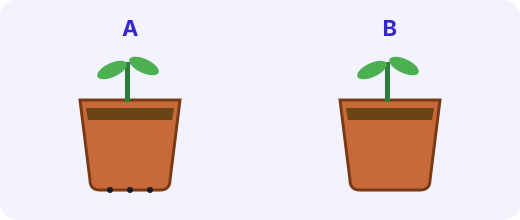
- Pot A, with holes in the bottom
- Pot B, with no holes
Choose one
2.What does a seed need to wake up and start growing?
- Water and warmth
- Bright sun and no water at all
- Only fertiliser, with no water
Choose one
3.Which of these are herbs? Pick all that apply.
- Mint
- Radish
- Coriander (dhaniya)
- Carrot
Choose all that apply
4.Put the growing steps in order.
- A seedling sprouts
- Harvest
- Sow seeds in damp soil
- Leaves grow bigger
- Water gently and give light
Put these in order
5.The soil is very wet and there is water in the saucer all week. The leaves are turning yellow. What should you do?
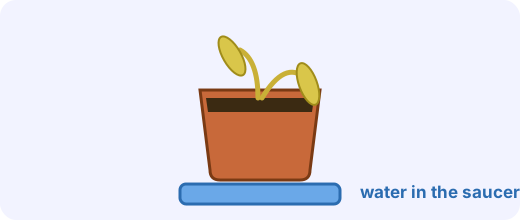
- Empty the saucer and water less, only when the top of the soil is dry
- Water it even more
- Move it into a dark cupboard
Choose one
6.On day 7 the seedling is 3 cm tall, as in the picture. It grows 2 cm every week. How tall is it on day 21?
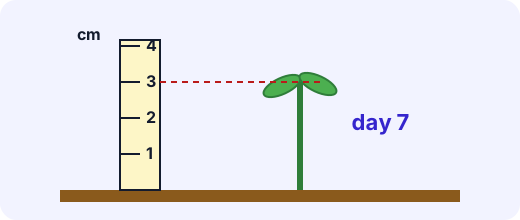
Answer with a number
7.What is the word for picking a plant when it is ready to eat?
Answer with a word or phrase
Answering and checking are for registered learners. Register to do this.
Quick check
New puzzles
Use what you know about growing food in new situations.
1.Priya sowed coriander seeds and put the pot on a shelf. She forgot to water it for ten days. Nothing has come up. What is the most likely reason?
- The seeds never got the water they need to wake up
- Coriander never grows in pots
- The pot was too small to hold seeds
Choose one
2.Omar's seedlings are tall, thin and pale. They were kept in a dark corner. What should he do?
- Move the pot to a place with plenty of light
- Keep it in the dark so it can rest
- Give it much less water and no light
Choose one
3.Tara wants her radishes to be ready sooner, so she waters them three times a day. What will probably happen?
- The soil will get soggy and the roots may rot, so the plants will not grow faster
- They will grow twice as fast
- They will be ready tomorrow
Choose one
4.A packet says cress is ready about 14 days after sowing. You sowed it on the 3rd of the month. On what date of the month will it be ready?
Answer with a number
5.A friend says, "Growing a herb is easy, you just put the seed in and wait." What is the best reply?
- You also need to give it water, light and a pot that drains, and check on it often
- Yes, plants grow themselves with no help
- It only works if you spend lots of money
Choose one
Answering and checking are for registered learners. Register to do this.
Activity
Tell it back
Your child tells the story of growing their plant and says what the plant needed. About five minutes, at harvest time.
Steps
- Look at the growth diary together. Ask "Tell me the story of your plant, from seed to harvest."
- Ask "What did the plant need from you? What happened when it got too much or too little?"
- Ask "How long did it take? What would you do the same, and what would you change?"
- Write down what your child says in their own words.
Keeping a log of the activity is for registered learners. Register to do this.
Like what you see?
Register for free to answer the quick checks, do the activities and save your work. Your work is saved on your device and syncs to your account.