Unit 5
Singing together
Learn songs and rhymes in two languages, and find out why good singers are good listeners.
Read
One song, many voices
On the first day of a new school year, Ananya's class sang a welcome song. Ananya loved singing, so she sang as loudly as she could. But the song sounded messy. Ananya was ahead of the others, and her voice was louder than all of them.
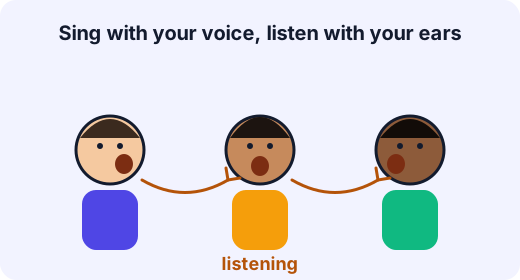
Her teacher smiled and said, "Let's try again. This time, sing with your voice and listen with your ears."
The second time, Ananya listened. She heard the others, and she sang along with them. The song sounded lovely.
Singing together needs listening
When many people sing together, three things have to match.
- Start together. Take a breath, look at your leader or count "1, 2, 3, 4", and begin at the same time.
- Keep the same beat. Everyone's feet and claps should tick at the same speed. (You met the beat in the last unit.)
- Match the loudness. Sing so that you can still hear the people next to you. If you cannot hear them, you are too loud.
A choir is not many people shouting at once. It is many people listening to each other while they sing.
Songs and rhymes in two languages
India has many languages, and so does the world. A song or rhyme is a good way to learn the sounds and words of a language, because the tune and the beat help you remember.
Here are two short rhymes.
Language Rhyme What it is about English "Row, row, row your boat, gently down the stream." rowing a boat on a river Hindi "Machhli jal ki rani hai, jeevan uska paani hai." (मछली जल की रानी है, जीवन उसका पानी है) a fish, the queen of the water, whose life is the water Many families also know songs in a second language such as Tamil, Bengali, Marathi, Telugu or French. Use the ones you know!
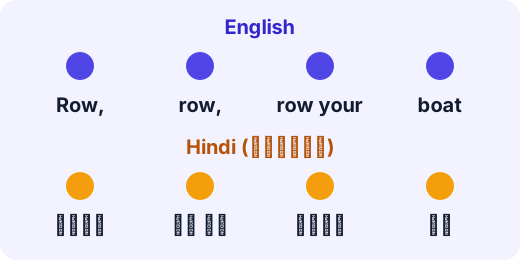
Different languages have different words and sounds, but the same ideas work in all of them: a steady beat, a tune that goes up and down, and words that repeat.
How to learn a new song
- Listen to the song once or twice, without singing.
- Say the words in rhythm, like a chant.
- Sing slowly with a friend or grown-up.
- Sing it at full speed with the group.
Try it: Pick one rhyme in each of two languages. Sing each one three times. Can you teach one to a friend?
A mix-up to avoid: a good singer is not the loudest singer. The best singing groups sound like one voice.
For the grown-up helping
Sing every day, in any languages the family speaks. Do not worry about "perfect" tunes: the aim is joy, listening and shared words. If your child sings too loudly, say "Can you hear my voice? Let's make ours blend." Gentle, relaxed singing is better for young voices than shouting, so take sips of water and stop if their throat feels scratchy.
Activity
Sing in two languages
Your child learns one song or rhyme in each of two languages and sings them with you, listening carefully. About 20 minutes, and you can do it over a few days.
You'll need
- A song or rhyme you know in language one (for example "Row, row, row your boat")
- A song or rhyme in language two (for example "Machhli jal ki rani hai"), or any song from your family's own language
- A glass of water
Steps
- Choose one short rhyme or song in each of two languages. Short means four lines or fewer.
- Listen first. The grown-up sings or says the first song slowly while your child listens and taps the beat.
- Say the words together like a chant, then sing them together. Do this three times.
- Do the same with the second song in the other language. Talk about what the words mean.
- Play the listening game. Sing the first song together and the grown-up makes their voice softer and softer. Can your child match, so you sound like one voice?
- Now swap. Your child starts and you follow, listening carefully.
- Sing both songs for a friend or another family member.
Safety
- Sing gently, not shouting. Take sips of water and stop if your child's throat feels scratchy or sore.
- Keep the volume comfortable when singing along to recordings.
Keeping a log of the activity is for registered learners. Register to do this.
Quick check
Singing together check
Six questions about singing with other people.
1.One singer is much louder than the rest. What should that singer do so the group sounds good?
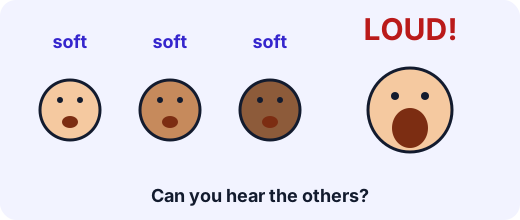
- Listen to the others and sing at the same loudness
- Sing even louder
- Stop singing for the whole song
Choose one
2.Why do we need to listen when we sing together?
- So our voices blend and we stay together
- So we can sing louder than the others
- We do not need to listen, only to sing
Choose one
3.Which of these help a group sing well together?
- Starting at the same time
- Keeping the same steady beat
- Being able to hear the people next to you
- Everyone singing as loudly as they can
Choose all that apply
4.Match each song or rhyme to its language.
- Machhli jal ki rani hai
- Row, row, row your boat
- Frère Jacques
Match each to: French · English · Hindi
5.Put these in the best order for learning a new song.
- Say the words like a chant
- Sing at full speed with the group
- Listen to the song
- Sing slowly with a friend
Put these in order
6.A friend sings the song faster than you. What is the best thing to do?
- Listen, find their beat, and sing with them
- Keep going at your own speed
- Stop and never sing again
Choose one
Answering and checking are for registered learners. Register to do this.
Quick check
New puzzles
Use what you know about singing together in some new situations.
1.Two friends sing a lullaby together. One of them starts early and the song gets all mixed up. What would help most?
- Breathe together and start on a count of 1, 2, 3, 4
- Sing louder than your friend
- Never sing with a friend
Choose one
2.A big school class sings in a noisy hall and nobody can hear anyone else. What should each child do?
- Sing a little more softly so you can hear each other
- Shout so the song is heard
- Whisper, then stop
Choose one
3.Imran knows a rhyme in Urdu and Maya knows one in Tamil. What is a good way to share them?
- Take turns teaching each other, then sing both
- Only sing the rhyme in the language Imran likes
- Do not sing, since the languages are different
Choose one
4.A rhyme has 4 lines. Your class sings it 3 times in a row. How many lines do they sing in all?
Answer with a number
Answering and checking are for registered learners. Register to do this.
Activity
Tell it back
Your child explains in their own words why listening matters when we sing together. Three minutes.
Steps
- Sing a short song together, once with your child singing out loud and the grown-up singing very softly (no shouting), and once with both of you singing at the same soft loudness.
- Ask "Which one sounded better? Why?"
- Ask "What do we need to do besides singing, when we sing with other people?"
- Write down what your child says, in their words.
Keeping a log of the activity is for registered learners. Register to do this.
Like what you see?
Register for free to answer the quick checks, do the activities and save your work. Your work is saved on your device and syncs to your account.