Unit 7
Performing a story
Rehearse a short scene again and again, then perform it for an audience, and see how practice makes it better.
Read
Practise, then shine
Nila had one line in the class play: "Look, the river is dry!" At the first practice she said it so quietly that nobody in the back row heard. She said it again after lunch, a bit louder. By the end of the week she said it with a gasp, a pointing finger and a big sad face. When the day of the show came, the whole hall heard her, and some children even gasped back.
What changed? She rehearsed.
Rehearse and perform
To rehearse means to practise something again and again before you show it. To perform means to show it to an audience, the people who watch and listen.
A performance is the show. A rehearsal is the practice behind it. The more you rehearse, the better the performance. That is the big idea of this unit.
A short scene to try
Here is a tiny scene, adapted from the old story of the thirsty crow. It has two actors and takes about two minutes.
Narrator: One hot day, a crow was very thirsty. Crow: (flapping tired wings) Water! I need water! Narrator: The crow found a pot, with a little water at the bottom. Crow: (peeping in) My beak cannot reach! What can I do? Narrator: The crow saw some pebbles. The crow dropped them in, one by one. Crow: (dropping pebbles, counting) One... two... three... four... five! The water is rising! Narrator: At last the crow could drink. Crow: (happy sigh) Ahhh. Clever thinking saves the day.
How to rehearse
Rehearsal happens in steps. Each step is a little closer to the real thing.
- Read through. Read the scene aloud together. Know who says what.
- Walk through. Add the moves, slowly: where you stand, where you walk, what you do with your hands.
- Run through. Do the whole scene from beginning to end without stopping, even if you make mistakes.
- Notice and fix. After each run, find one thing to make better. Fix it, and run again.
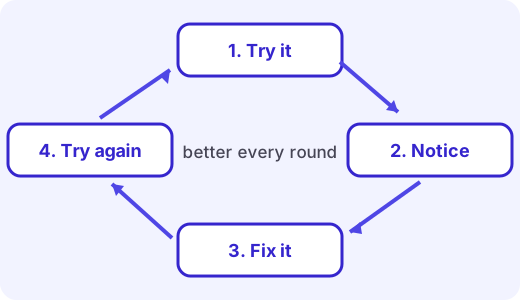
Try it: Say "My beak cannot reach!" three ways: in a whisper, in a normal voice, and in a voice that is worried and loud enough for the back of a room. Which one tells the audience what the crow feels?
Performing for an audience
The audience cannot read your mind. They only get what they can see and hear. So:
- Face the audience. Do not turn your back to them. Use the stage so that everybody can see your face.
- Speak up and slow down. Speak loudly enough to be heard at the back, and not too fast.
- Use your face and your body. Show the thirst and the joy.
- Keep going. If something goes wrong, do not stop. Carry on, and the audience will often not notice.
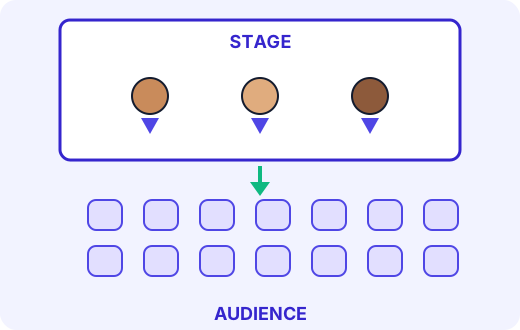
The audience has a job too: watch quietly, listen and clap at the end.
Example. Your group rehearses the scene for 12 minutes. One run-through takes 3 minutes. If you only run through, with no stops, you can do run-throughs. But if you spend 2 more minutes noticing and fixing after each run, then each round costs 5 minutes, and you fit in only 2 rounds, and the scene gets better each time.
A mistake to watch for
Some children worry that rehearsing too much will make the performance boring. The opposite is true. When you know your lines and your moves well, you do not have to think about them, so you can put your energy into feeling and expression.
Feeling nervous before you perform is normal. Take three slow breaths. It is a sign that you care.
For the grown-up helping
Be a kind audience: sit still, look interested and clap at the end. After each run-through, ask your child "What was the best part? What would you change?" before you offer your own idea. Do not ask for perfection: forgotten lines and giggles are part of children's theatre. Notice effort and improvement, such as "I heard you in the back!"
Activity
Rehearse a scene
Your child and one or two others rehearse a short scene over three practice rounds, fixing one thing each time. About 30 minutes.
You'll need
- The thirsty crow scene from the reading, or a short scene of your own choosing (about two minutes long)
- Simple props, such as a pot and some pebbles or small balls of paper
- Paper and a pencil for notes
- A clear space to be the stage
Steps
- Choose the scene and decide who plays each part. Everyone reads it aloud once together (read through).
- Mark out the stage with a rug or tape on the floor. Decide where the audience will sit, and make sure the actors face them.
- Walk through it slowly. Decide where each person stands and moves, and what the props do. Do not worry about voices yet.
- Run through the whole scene without stopping, even if there are mistakes. This is round one.
- After round one, everyone says one thing that went well and one thing to fix, such as speaking louder, facing the audience, or slowing down. Write the fix on the paper.
- Run through the scene again with that one fix in mind. This is round two. Then notice and fix one more thing.
- Run through for a third time. Compare round one with round three. Ask: What is better now?
Safety
- Keep the stage clear of toys and trip hazards. Use only soft props. Do not use anything sharp or heavy.
- Wear shoes with grip, or go barefoot, on a floor that is not slippery.
- Let each child stay at their own comfort level. Nobody should be forced to act. A shy child can be the narrator, the prop helper or the director.
Keeping a log of the activity is for registered learners. Register to do this.
Activity
The show
Your child performs the rehearsed scene for an audience of family or friends, then talks about how it went. About 20 minutes.
You'll need
- The rehearsed scene and its props
- Chairs or cushions for the audience
- A small programme (optional), a sheet of paper with the title and the names of the actors
Steps
- Invite two or more people to be the audience. Set out their seats in front of the stage. Explain the audience job to them, which is to watch quietly, listen well and clap at the end.
- The actors take three slow breaths. The narrator announces the title of the scene.
- Perform the scene from beginning to end. If something goes wrong, keep going.
- When the scene ends, the actors hold still for a moment, then bow. The audience claps.
- The audience says one thing they liked (not a fix). Then the actors say what they would do differently next time.
- Compare the show with the first run-through. Ask: What is better now? What did the practice do?
Safety
- Keep the stage clear and the props soft.
- Nobody should be pushed to perform if they do not want to. A child can take a smaller part, such as narrator or helper, and still count as taking part.
- Keep audience comments kind and about the performance, not about the person.
Keeping a log of the activity is for registered learners. Register to do this.
Quick check
Performing check
Seven questions about rehearsing and performing.
1.Who is the audience?
- The people who watch and listen to the performance
- The people who act in it
- The people who write the story
Choose one
2.What is the theatre word, starting with R, for practising a scene again and again before you show it?
Answer with a word or phrase
3.Why does rehearsing make a performance better?
- You know your lines and moves, so you can put feeling into them
- It makes the show shorter
- It does not; you perform best with no practice
Choose one
4.Put the steps of rehearsal in the best order.
- Walk through the moves slowly
- Run through the whole scene without stopping
- Notice one thing to fix, then run again
- Read through the scene together
Put these in order
5.Which picture shows the actor in a better place for the audience?
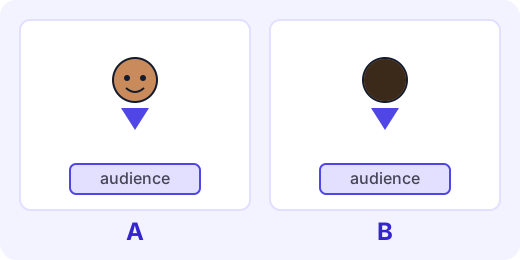
- A, facing the audience
- B, with their back to the audience
Choose one
6.Which of these help the audience at the back to hear and see you?
- Speaking loudly and clearly
- Facing the audience
- Speaking slowly enough to be understood
- Mumbling to yourself
Choose all that apply
7.A group runs through their scene 3 times a day for 4 days. How many run-throughs is that?
Answer with a number
Answering and checking are for registered learners. Register to do this.
Quick check
New puzzles
Rehearsal and performance turn up in new places. Can you use what you know?
1.During the show, Dev forgets his line. What is the best thing to do?
- Take a breath and keep going, perhaps with a helper line from a partner
- Stop, say sorry and walk off the stage
- Stop acting and tell the audience everything went wrong
Choose one
2.The audience laughs in the middle of a funny moment. What should the actors do?
- Wait a moment until the laughing dies down, then carry on
- Talk right over the laughter so nobody can hear it
- Stop the scene altogether
Choose one
3.A scene lasts 3 minutes. The group has 15 minutes of practice and uses all of it for run-throughs, with no stops. How many full run-throughs can they do?
Answer with a number
4.After the first run-through, the director says, "I could not hear the people in the back row." Which fix is best for the next round?
- Speak louder and clearer, and face the audience
- Speak more quietly
- Speak faster so the scene ends sooner
Choose one
5.Which is the better way to rehearse?
- After each run, pick one thing to fix, and try again
- Never stop, and never change anything
- Rehearse just once, the night before
Choose one
Answering and checking are for registered learners. Register to do this.
Activity
Tell it back
Your child explains, in their own words, how rehearsing made the performance better. Three minutes.
Steps
- Ask your child: What was the first run-through like? What was the show like? What was different?
- Ask: What did you fix, and how did you notice it needed fixing?
- Ask: What would you tell a friend who is nervous about performing?
- Write down what your child says in their own words. Do not correct them.
Keeping a log of the activity is for registered learners. Register to do this.
Like what you see?
Register for free to answer the quick checks, do the activities and save your work. Your work is saved on your device and syncs to your account.