Unit 9
Writing letters and words
Make your letters on the lines, and spell any regular word by turning its sounds into letters.
Read
Spelling is reading backwards
Grown-up: do the "Try it" steps together on paper. Sounds are in slashes, like /k/.
Vir wants to write a label for his school bag. He wants to write bag. He does not need a grown-up to spell it. He has a secret: he already knows how to read.
When you read, you look at letters and turn them into sounds. When you write, you do it backwards: you hear the sounds and turn them into letters. Reading is letters to sounds. Spelling is sounds to letters.
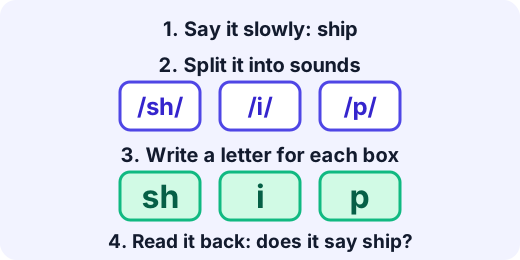
How to spell a word
- Say the word slowly.
- Split it into sounds (tap them on your fingers).
- Write a letter, or letter pair, for each sound.
- Read it back to check it says the word.
Example. Spell bag.
- Say it: bag.
- Split it: /b/ /a/ /g/. Three sounds.
- Write: b, a, g.
- Read it back: b-a-g, bag. Yes!
Remember the letter pairs from earlier: sh and ck are two letters, but only one sound each. In ship the boxes are /sh/ /i/ /p/, so you write sh, i, p. In duck they are /d/ /u/ /ck/, so you write d, u, ck.
For silent e words like kite, hear /k/ /ī/ /t/ and write k, i, t, and then add the silent e at the end so the i says its name.
Try it: Spell frog and sun. First tap the sounds on your fingers: /f/ /r/ /o/ /g/ and /s/ /u/ /n/. Then write them. Read each one back.
Some words are tricky
Not every word can be spelled just by listening. Heart words like said, was and the have a part you must learn by heart. If you spell said as "sed", your sounds were fine, but the usual spelling uses ai. When you are learning, a try like "sed" is a good start. Then you look at the right spelling and fix the tricky part.
Making the letters
Neat writing helps other people read what you wrote. Here are the key ideas.
- Hold your pencil with a gentle grip, with your first finger and thumb, and rest it on the middle finger.
- Start at the top. Most letters begin at the top and go down or round.
- Use the lines. Some letters are tall (b, d, h, k, l), some are short (a, c, e, m, o, s), and some have a tail that hangs below the line (g, j, p, q, y).
- Make a letter the same way every time. That makes it quick and tidy.
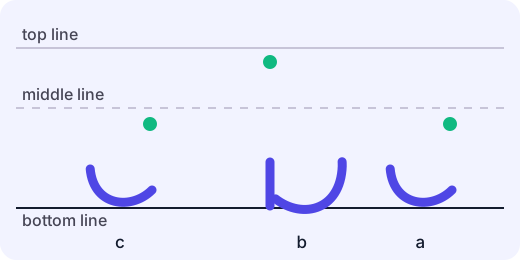
Watch the picture. The c starts at the green dot and curves round to the left. The a starts like a c and then has a line down. The b starts with a tall line down, then a bump to the right. Many schools teach slightly different ways to form some letters, so follow your teacher's way as well.
Letters that start with the same curve can be practised together:
Family Letters How they start Curly c c, a, o, d, g, q, e start like a c Down and up b, h, m, n, p, r go down, then up and over Straight down l, i, t, j a line down Slants and zigzags v, w, x, y, z, k diagonal lines Capital letters start names and sentences. Write them on the line, bigger than the small letters.
Common mix-ups
b and d. They look alike. Make a b with the line first, then the bump: "bat then ball". For d, make the round part first, then the line: it begins like a c.
Too many sounds. The word ship has four letters, but three sounds. Count sounds, not letters.
"It is spelled wrong, so I am no good at it." No! Spelling by sounds is how everyone starts. Make a try, read it back, and fix what does not look right.
For the grown-up helping
Let your child say the word and tap the sounds before writing. Do not spell it for them. If they write "kat" for cat, praise the sounds ("you heard all three!") and then show the usual spelling. Practise letters by writing in a tray of salt or sand, tracing in the air, and using big arm movements before small pencil ones. Short sessions are better than long ones, and a tidy few letters beat a rushed page.
Lab
Letter lines and sound boxes
First sort letters by where they sit on the line. Then spell words by dropping letters into sound boxes. A grown-up can say the sounds with you.
Your goals
- Sort nine letters into tall, short and tail letters.
- Spell six words by putting letters in their sound boxes.
The interactive lab opens once you register. Register to do this.
Activity
Write it in the tray
Your child practises forming letters in a tray, then spells five words by their sounds on paper. About 20 minutes.
You'll need
- A tray, baking sheet or box lid
- A thin layer of dry salt, sand or flour in the tray (or a plate and a finger-paint pot)
- Paper with lines, or lines you draw (three lines: top, middle, bottom)
- A pencil
Steps
- Spread the salt or sand thinly in the tray. Write the letter c with your finger, saying 'Start at the top, go round to the left.' Your child copies it. Wipe it flat with your hand.
- Practise c, a, o, d, b and h in the tray. Say where each one starts: at the top or just below the middle line.
- On lined paper, your child writes each of those letters three times, slowly. Circle the best one.
- Dictation: say the word sit slowly. Your child taps the sounds on their fingers, then writes the word. Do the same with hen, mop, ship and kite.
- After each word, your child reads it back, pointing to each letter. If the spelling is not the usual one, say 'You heard all the sounds! Let us look at this part.' and show it.
- Finish by drawing a picture of one of the words and writing its label.
Safety
- Salt, sand and flour are not food for this activity. Keep them away from eyes and mouths, and from babies.
- The grown-up wipes up any spills so nobody slips, and washes hands afterwards.
- Check for allergies before using flour.
Keeping a log of the activity is for registered learners. Register to do this.
Quick check
Writing letters and words check
Seven questions. Say each word slowly before you answer.
1.Which spelling matches the picture?
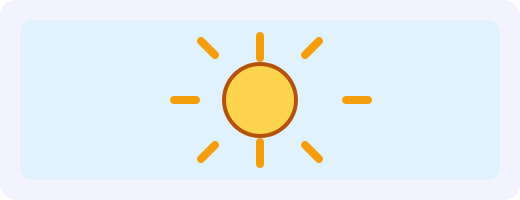
- sun
- sin
- sap
Choose one
2.How many sounds are in the word for this picture?
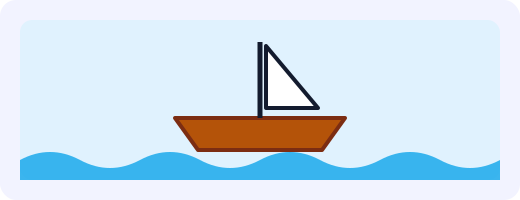
Answer with a number
3.Which letters have a tail that hangs below the line?
- g
- p
- a
- y
- t
Choose all that apply
4.Put the steps for spelling a word in the right order.
- Split it into sounds
- Read it back to check
- Write a letter or letter pair for each sound
- Say the word slowly
Put these in order
5.Write the word for the sounds /d/ /o/ /g/.
Answer with a word or phrase
6.The sounds are /k/ /a/ /t/. Which is the right spelling for this picture?
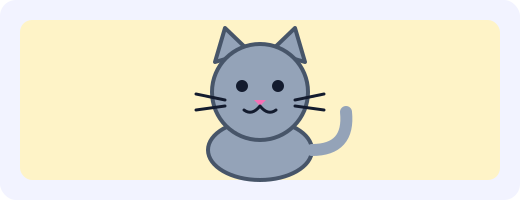
- cut
- cat
- cot
Choose one
7.In the word dog, which letter is the tall one?
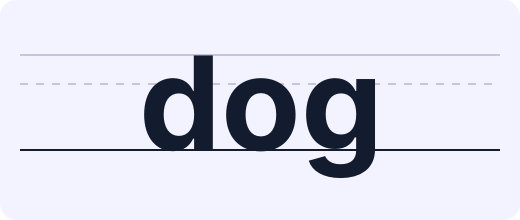
- d
- o
- g
Choose one
Answering and checking are for registered learners. Register to do this.
Quick check
New puzzles
Spell new words using sounds you know.
1.Spell the word for the sounds /f/ /i/ /sh/. It swims in water.
Answer with a word or phrase
2.Spell the word for the sounds /k/ /ā/ /k/. You bake it for a birthday.
Answer with a word or phrase
3.Kabir wrote "stik" for the word stick. What is true about his try?
- A good try: every sound is there, but the usual spelling ends in ck
- A poor try: he left out the /s/ sound
- A perfect try: stik is the usual spelling
Choose one
4.Which word cannot be spelled correctly by listening to its sounds alone?
- was
- win
- hop
Choose one
5.How many more letters than sounds does the word duck have?
Answer with a number
Answering and checking are for registered learners. Register to do this.
Activity
Tell it back
Your child explains how to spell a word they have not written before, and how spelling is like reading. Three minutes.
Steps
- Ask 'How would you spell the word frog? Tell me what you do, step by step.' Do not help with the letters.
- Ask 'When you read, you go from letters to sounds. What do you do when you spell?' (From sounds to letters.)
- Ask 'What do you do after you write the word?' (Read it back.) Write down what your child says, in their words.
Keeping a log of the activity is for registered learners. Register to do this.
Like what you see?
Register for free to answer the quick checks, do the activities and save your work. Your work is saved on your device and syncs to your account.