Unit 11
People who made a difference
Hear the stories of Savitribai Phule and Florence Nightingale, and find out how one person can change many lives.
Read
Two people, many lives
Have you ever seen something that was not right, and wished you could fix it? Long ago, two people did exactly that. They lived in different countries, but each one saw a problem and decided to do something about it.
When a person's actions change many people's lives for the better, we call them a significant person. A change is something that is different from before.
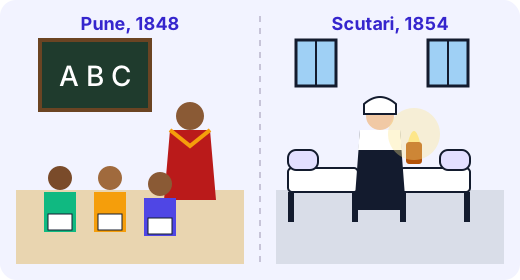
Savitribai Phule: a school for girls
Savitribai Phule was born in 1831 in a village in Maharashtra, India. In those days, most girls were not sent to school. Many people thought girls did not need to learn to read.
Savitribai learned to read and write, and she wanted other girls to have the same chance. In 1848, she and her husband, Jyotirao Phule, opened a school for girls in Pune. Savitribai became a teacher there.
Some people did not like this. As she walked to school, some people shouted at her and threw mud and dirt. Savitribai did not stop. She carried a spare sari in her bag, changed at school and kept on teaching. She went on to help open many more schools. Later, when a deadly illness called plague spread in 1897, she helped care for sick people, and she died from the illness herself.
Florence Nightingale: a cleaner hospital
Florence Nightingale was born in 1820 to a British family. She wanted to be a nurse, and in those days that was not thought a proper job for a woman from a rich family. She trained anyway.
In 1854, soldiers were fighting in a war in Crimea. Many were hurt or sick. Florence took a team of nurses to the big army hospital at Scutari. It was dirty and crowded, and more soldiers were dying of illness than of wounds.
Florence's team scrubbed the floors, washed the sheets and bandages, opened windows for fresh air and made sure the men got good food. Slowly, fewer soldiers died. At night she walked the long rows of beds with a lamp, checking on each patient. People began to call her "the Lady with the Lamp".
Back home, Florence kept going. She wrote down numbers and drew charts to show leaders how cleaner hospitals saved lives. In 1860 she started a school for nurses in London. Hospitals around the world learned from her.
What changed?
Look at how both stories work:
The problem What they did What changed Savitribai Phule Many girls could not go to school Opened and taught in a school for girls More girls learned to read and write Florence Nightingale Dirty hospitals where many soldiers died Cleaned, fed and cared for patients; trained nurses Fewer people died; nursing became a respected job 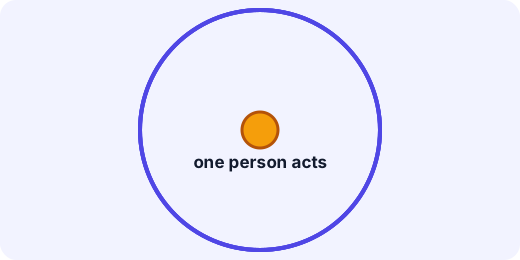
Example. A girl in Pune learns to read at Savitribai's school. She later teaches her little sister, and then her own children. One school grew into many readers. That is how one person's actions change many lives, like ripples from a stone dropped in a pond.
Common mix-ups
- "Only kings and generals change the world." These two were a teacher and a nurse. Ordinary jobs can change history.
- "They did it alone." Savitribai worked with Jyotirao and other helpers. Florence had a team of nurses. Big changes often need many hands.
- "It was easy." Both faced people who said no. They kept going because they believed the change mattered.
For the grown-up helping
Retell the stories in your own words, then ask "What problem did she see? What did she do? What is different now?" Children this age often like the details (the spare sari, the lamp). Follow up by asking about someone near you who made things better, such as a teacher, a doctor or a neighbour.
Activity
Story card and a helper near me
Your child makes a story card about Savitribai Phule or Florence Nightingale, then asks someone nearby about a person who made life better for others. About 30 minutes.
You'll need
- A sheet of paper folded in three, or three small cards
- Pencils or crayons
Steps
- Your child chooses one of the two people. Together, retell their story from the reading, or from a library book.
- Fold the paper in three. On the first part, draw and write the problem the person saw. On the second, what they did. On the third, what changed.
- Your child tells the story to a family member using the card.
- Ask your child to think of someone they know who made life better for other people (a teacher, doctor, a neighbour who cleans the lane, a grandparent). Together, ask that person or a family member "What did they do? What changed?"
- On the back of the card, draw or write about that person in one or two sentences.
Safety
- Talk to people you know, with an adult nearby.
- If you search the internet or look up pictures, an adult does the search with the child.
Keeping a log of the activity is for registered learners. Register to do this.
Quick check
People who made a difference check
Seven questions about Savitribai Phule, Florence Nightingale and how one person can change many lives.
1.Who opened a school for girls in Pune in 1848, together with her husband?
- Savitribai Phule
- Florence Nightingale
- Neither of them
Choose one
2.Who was called "the Lady with the Lamp"?
- Savitribai Phule
- Florence Nightingale
Choose one
3.Match each person to what they did.
- Savitribai Phule
- Florence Nightingale
Match each to: Made a hospital cleaner and trained nurses · Opened a school for girls and taught there
4.Put Florence Nightingale's story in order.
- She arrives at a dirty, crowded army hospital
- She starts a school for nurses in London
- Fewer soldiers die
- Her team cleans, opens windows and gives good food
Put these in order
5.Why did Savitribai Phule carry a spare sari to school?
- People threw mud and dirt at her on the way, so she changed at school
- She gave it to a new student as a gift
- She sold saris to pay for the school
Choose one
6.Which of these did Savitribai Phule do?
- Taught girls at a school
- Helped care for people sick with plague
- Took nurses to a hospital in the Crimean War
- Started a nursing school in London
Choose all that apply
7.Which sentence is the big idea of these stories?
- One person's actions can change many lives
- Only rich people can make a difference
- Changing things is always quick and easy
Choose one
Answering and checking are for registered learners. Register to do this.
Quick check
New puzzles
The ideas from these stories show up in new places. Can you use what you know?
1.Ravi sees that the village well is dirty and children get ill from the water. He asks neighbours to help clean it each week and put a cover on it. What did Ravi do that is like what Savitribai and Florence did?
- He saw a problem and did something to fix it
- He waited for someone famous to fix it
- He decided it was too big a problem to try
Choose one
2.A girl learns to read at a school for girls, then teaches her younger sister and her friends. What does this show?
- A good change can spread from one person to many
- A change always stops with the first person
- Reading does not change anything
Choose one
3.Which is the best question to ask when you learn about a person from history?
- What problem did they see, and what did they do about it?
- What was their favourite colour?
- How much money did they have?
Choose one
4.Savitribai opened the girls' school in 1848. Florence Nightingale went to the Scutari hospital in 1854. How many years later did Florence go?
Answer with a number
Answering and checking are for registered learners. Register to do this.
Activity
Tell it back
Your child tells the stories of two people from history and explains how one person can change many lives. About five minutes.
Steps
- Ask your child to tell you about Savitribai Phule. What was the problem, what did she do, and what changed?
- Ask the same about Florence Nightingale.
- Ask "How can one person change the lives of many people? Can you think of an example?" Don't correct yet; ask "What happened after that?"
- Write down what your child said, in their words.
Keeping a log of the activity is for registered learners. Register to do this.
Like what you see?
Register for free to answer the quick checks, do the activities and save your work. Your work is saved on your device and syncs to your account.