Unit 2
Yoga sequences
Link seven yoga moves into a short sun salute and match each move to a slow breath.
Read
Move with your breath
Every morning, Ishaan's grandfather stands on the roof in the early light and moves slowly: arms up, bend down, stretch, rise again. He does not hurry. His breathing goes in and out like waves.
"Why so slow, Dada?" asks Ishaan.
"Because I am not racing anyone," says Dada. "I am moving with my breath."
A sequence
In MEF 1 you learned single yoga poses. A sequence is a set of poses done one after another, in the same order each time. Because you know what comes next, your mind can relax into it, like a song you know by heart.
The most famous sequence is Surya Namaskar, from India. Surya means the sun and namaskar means a respectful greeting, so it is called the sun salute. The full sun salute has twelve positions. Here is a shorter one with seven moves, good for beginners.
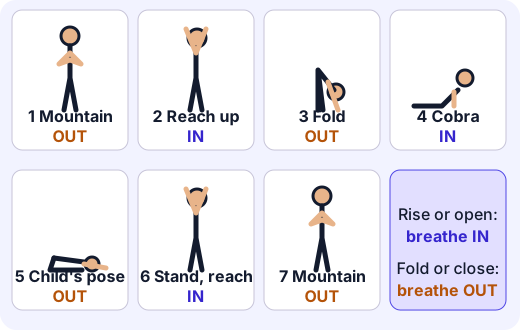
Move What to do Breath 1. Mountain Stand tall, palms together at your chest Out 2. Reach up Raise your arms overhead and look up In 3. Fold Bend forward from the hips, knees soft, hands toward the floor Out 4. Cobra Lower onto your tummy and gently lift your chest In 5. Child's pose Kneel, sit back on your heels, rest your forehead down Out 6. Stand and reach Come back up slowly and raise your arms In 7. Mountain Bring your palms together at your chest Out Each move takes one slow breath.
The breath rule
You do not need to memorise the table. Remember one rule:
- When your body rises or opens (arms up, chest lifting), breathe in.
- When your body folds or closes (bending down, sitting back, hands together), breathe out.
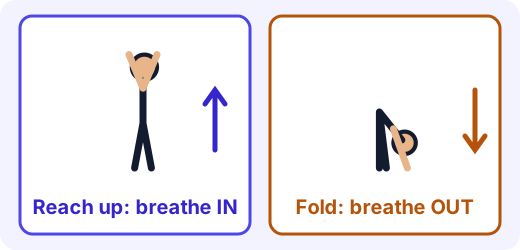
Try it standing up. Breathe in through your nose as your arms float up. Breathe out through your nose or mouth as they come down. Your body already wants to do it this way, because your chest has more room when you stretch up.
Try it: Do moves 1, 2 and 3 slowly. Does the rule feel natural? What would feel odd, breathing out while reaching up?
Why does it steady you?
When you rush or feel worried, your breathing gets quick and short. When you slow it down, your body gets the message that it is safe, and you feel calmer. Moving with the breath gives your mind one simple job: follow the breath. Thoughts that were jumping around settle down. That is what it means to feel steady.
Worked example: counting breaths
Example. How many breaths does it take to do the seven-move sequence two times in a row?
- One round has 7 moves, one breath each, so 7 breaths.
- Two rounds is 7 + 7 = 14 breaths.
If each breath takes about 5 seconds, that is about 70 seconds. A calm minute and a bit.
Looking after your body
- Move slowly. Yoga is not a race and nobody is judging.
- Stretch only as far as feels comfortable. If something hurts or you feel dizzy, stop and rest.
- In the fold, keep your knees soft and do not bounce.
- Use a mat on a flat, non-slippery floor.
- Wait until your tummy has settled after a meal.
- Never hold your breath. Keep it smooth.
A mistake people make
Some children think a better sun salute is a faster one. It is the opposite. If you are puffing, you are going too fast. Slow down until your breath is smooth and quiet.
For the grown-up helping
Do the sequence with your child, a few minutes a day. Call out the moves and the breath ("reach up, and in... fold down, and out") for the first few rounds, then let them lead. Keep it playful and don't correct small differences in posture; the goal at this age is smooth breathing and a calm feeling, not perfect shapes. Children should never be pushed into a stretch. If a child has an injury, a breathing condition such as asthma, or a health concern, ask a doctor which movements suit them.
Activity
The short sun salute
Your child moves through the seven-move sun salute twice, matching each move to one slow breath. About 15 minutes. Do it along with your child.
You'll need
- A mat, rug or folded blanket on a flat, non-slip floor
- Loose, comfortable clothes
- A clock or phone to note the time (optional)
Steps
- Stand and take three slow breaths together: in through the nose for a count of 4, out for a count of 4.
- Practise the breath rule with arms only: breathe in as your arms float up, breathe out as they come down. Do this five times.
- Learn the moves slowly, one at a time, calling the breath out loud. 1 Mountain, palms together (out). 2 Reach up (in). 3 Fold forward with soft knees (out). 4 Lower onto the tummy and lift the chest into cobra (in). 5 Child's pose (out). 6 Stand up slowly and reach up (in). 7 Mountain, palms together (out).
- Do the whole sequence once, slowly, one breath per move.
- Do it a second time. This time your child calls the moves and the breath for you.
- End by standing or sitting still for five breaths. Ask: "How do you feel now? Is your breathing slower than when we started?"
Safety
- Move slowly and never push or pull a child into a stretch. Stop if anything hurts or feels dizzy.
- Keep the knees soft in the fold and do not bounce.
- Use a mat or rug on a clean, flat, non-slip floor, and clear space of furniture and toys.
- Wait until after a meal has settled before moving.
- Never hold the breath. If a child has asthma, an injury or another health concern, ask a doctor which moves suit them.
Keeping a log of the activity is for registered learners. Register to do this.
Quick check
Yoga sequence check
Seven questions about moving with your breath.
1.In the sun salute, when do you breathe in?
- When your arms rise or your chest lifts
- When you fold forward
- Only at the very end
Choose one
2.Look at the picture. Which breath goes with folding forward?
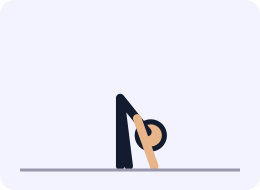
- Breathe in
- Breathe out
Choose one
3.Put the first five moves of the short sun salute in order.
- Child's pose
- Cobra
- Fold forward
- Mountain, palms together
- Reach up
Put these in order
4.What does "Surya" mean in Surya Namaskar?
- Sun
- Moon
- Breath
Choose one
5.Which of these are safe yoga habits?
- Move slowly with your breath
- Stretch only as far as it feels comfortable
- Stop and rest if you feel dizzy or sore
- Bounce deep into a stretch to go further
Choose all that apply
6.Your friend is huffing and puffing during the sequence. What is the best tip?
- Go even faster to finish sooner
- Slow down and match each move to a slow breath
- Hold your breath until it feels better
Choose one
7.The short sun salute has 7 moves, and each move takes one breath. How many breaths in two rounds?
Answer with a number
Answering and checking are for registered learners. Register to do this.
Quick check
New puzzles
Use the breath rule in moves you have not seen before.
1.Sana feels jumpy before a class test. Which is the best thing to try?
- A few slow stretches, breathing smoothly with each one
- Run around as fast as she can
- Hold her breath and stay very still
Choose one
2.Use the rule, "rise or open is in, fold or close is out". Which of these moves go with breathing IN?
- Raise both arms up
- Bend forward to touch your toes
- Lift your chest in cobra
- Sit back into child's pose
Choose all that apply
3.Neha is pushing to hold the fold longer. Her back is starting to hurt. What should she do?
- Ease out of the stretch gently and rest
- Push harder so she gets better
- Ignore it and hold her breath
Choose one
4.Ravi has just finished a big lunch and wants to do the sun salute straight away. What is a good plan?
- Wait until his tummy has settled, then move slowly
- Start right now and go as fast as possible
- Never do yoga on days he eats lunch
Choose one
Answering and checking are for registered learners. Register to do this.
Activity
Tell it back
Your child explains, in their own words, how moving with the breath helps them feel steady. Three minutes.
Steps
- Ask "Can you show me how your breath goes when you reach up, and when you bend down?"
- Ask "What happens to your breathing when you rush? What happens when you go slowly?"
- Ask "When could you use slow stretches and breaths? Maybe before something that makes you nervous?" Wait for their ideas.
- Write down what your child says, in their words.
Keeping a log of the activity is for registered learners. Register to do this.
Like what you see?
Register for free to answer the quick checks, do the activities and save your work. Your work is saved on your device and syncs to your account.